


Building Lower Body Strength
A great place to start building strength is with the lower body. Strong legs and hips are critical for walking, jogging, hiking, climbing stairs, dancing or any activity that takes you from here to there. Legs are also critical for lifting things.
We will cover two simple strength building exercises and connect them with functional fitness. They are all easily done in your own home. No gym required.
As always, start from where you are. For each of the exercises below start easy, then, as you make progress, try a harder version of the exercise.
Squats and lunges are widely recognized as excellent exercises to build strength of the lower body to maintain or enhance lower body mobility. These exercises don’t require equipment, are easy to do and can be modified to suit your current capability.
Squat: The image below shows the basic squat movement. Begin by standing with your feet about shoulder width apart. Point your toes forward. Keep your back straight as you bend your knees and hips to lower yourself so that your knee forms a right angle. It is ok if you can’t go very deep. Go as deep as you can comfortably. When that feels comfortable, you can go a bit deeper so that your thighs are parallel to the floor.

See how many squats you can do comfortably. Let’s say you can do 10 repetitions without compromising your form. Congratulations! That is your new personal best!
As you do more squats, you will find that they become easier and you will be able to do more. You can make the squat more difficult by holding a 5 pound weight in each hand. If you can do squats holding 10 pounds, then doing squats with no weight should be a piece of cake. You can add weight and set new goals for yourself. When you reach a goal, remember to reward yourself.
After you have made progress doing squats, try a familiar activity, like climbing stairs. It should be easier.
Lunges are also excellent for building lower body strength. And, lunges include flexibility and balance components that enhance the benefits of doing the exercise.
As the images below show, lunges can take many forms. The basic form is to start by standing with your feet a comfortable distance apart. Then you can step straight forward with one foot keeping your foot a comfortable distance to the side of the other foot. Don’t put your moving foot directly in front of the other foot as that will require too much balance and make the exercise difficult.
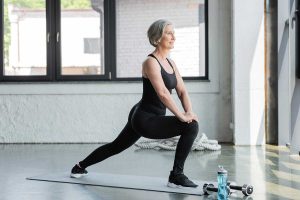 Once your feet are in place, bend your forward knee to lower your body. Do this slowly and don’t go beyond what you can do comfortably. As with the squat, you can make the exercise more challenging by going deeper until your back knee touches the floor. As you go deeper, you can feel the stretching component kick in. Do as many as you can comfortably with each leg to find your current personal best. Adding repetitions or weight will add difficulty and will add strength.
If you are comfortable doing so, you can put your trailing foot right behind the forward foot. This adds the significant balance component to the exercise. Start by holding on to a chair for stability and move slowly to avoid falling.
Another variation is the side lunge as shown below. This version of the lunge shifts some of the work to other lower body muscles and stretches your hips in a different direction. The side lunge is an excellent complement to the lunge and the squat.

As you get more experienced with the lunge, you will appreciate the multiple benefits of building strength, balance and flexibility in one exercise.
Taken together, squats and lunges provide an excellent routine for building lower body strength to increase your mobility.
Let’s Get Moving!