
Fun Facts
Does Exercising Make You Smarter?
Does Exercise Make You Smarter?
Yes! Several studies have shown that regular exercise can improve memory, problem solving, planning and other executive functions and increases the size of regions of the brain associated with these functions (1, 2).
Let’s Get Moving!
-
Exercise can boost your memory and thinking skills. (2024). Harvard Health Publishing,.
-
Physical Activity Boost Brain Health, (2025). Centers for Disease Control,
Mop Dancing
Mop Dancing
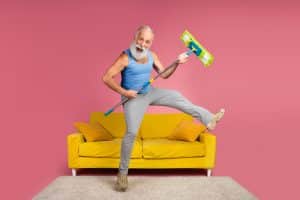
A dear friend recently told me that they integrate exercise into their daily tasks by dancing around the house while mopping up the fur from their three huge dogs. Incorporating exercise into your daily routine is one of the best ways to get fit while doing something you are going to do anyway.
How do you include exercise in your daily routine? Let me know what your routine is at rusty@train4life.live
Let’s Get Moving!
Dance to Health

Does Dancing Help Avoid Falls?
A fall can be devastating for someone over 65. But, according to research, seniors who dance have better balance, more mobility and stronger lower bodies than their peers. They also reduce their chance of a fall by 31% (1).
May I have the next dance?
Let’s Get Moving!
Mattle, M. et al. (2020) Association of Dance-Based Mind-Motor Activities With Falls and Physical Function Among Healthy Older Adults – A Systematic Review and Meta-analysis. JAMA Netw Open. 3(9):e201768
Train Like a Dog
Train Like A Dog

VO2max is the gold standard of fitness. It measures how much oxygen your body can utilize during intense exercise. Endurance training will improve your VO2max. The VO2max of a middle aged fit man will be less than 40 ml of oxygen/kg of body weight/min. Elite marathoners have a VO2max of over 75 ml/kg/min. (2) Domesticated dogs have a VO2max of 174 ml/kg/min. (3)
I am going to start training with my dog.
Let’s Get Moving!
1. Karlsen, T., et al. (2015). How to be an 80 year old and yave a VO2max of a 35 year old.
2. Brandt, S. and Trafton, A. (2010) Fuel efficiency for marathoners. The Harvard Gazette.
3. Ultra-endurance competitors: Lessons from sled dogs in the Iditarod. (2008). Science News. American Physiological Society.
Time Management
Time Management
According to Harmony Healthcare IT, American Baby Boomers spend an average of 4 hours and 19 minutes per day looking at their phones (1). Health experts recommend no more than 2 hours per day (2).
The Centers for Disease Control recommends that all adults get at least 150 minutes per week of moderately intense exercise (3). That is just 30 minutes per day for 5 days a week. But only 23% of adults meet this goal.

We can do better managing our time.
Let’s Get Moving!
https://www.harmonyhit.com/phone-screen-time-statistics
https://www.nhlbi.nih.gov/health/educational/wecan/reduce-screen-time/index.htm
https://www.cdc.gov/physical-activity-basics/guidelines/older-adults.html#:~:text=Every%20week%2C%20adults%2065%20and,75%20minutes%20at%20vigorous%20intensity
Racquet Arm Strength
Racquet Arm Strength

A group of British researchers studied the muscle and bone strength of the racquet arm vs the non-racquet arm in tennis players. They found that the muscles and the bones of the racquet arm were significantly bigger and stronger than those of the non-racquet arm. They conclude that:
“These results support a strong influence of muscular action on bone adaptation.”
Game, Set, Match
Let’s Get Moving!
IRELAND, A., MADEN-WILKINSON, Tom, MCPHEE, J., COOKE, K., NARICI, M., DEGENS, H. and RITTWEGER, J. (2013). Upper limb muscle-bone asymmetries and bone adaptation in elite youth tennis players. Medicine and Science in Sports and Exercise, 45 (9), 1749-1758.
Performance Anxiety
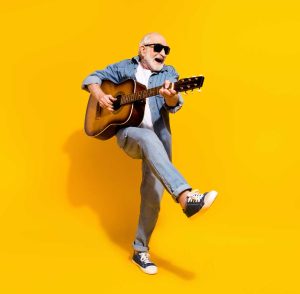 Performance Anxiety
Musical performance anxiety is reduced in musicians who engage in regular physical activity.
I can dance to that.
Let’s Get Moving!
Rocha, S., et. al. Physical Activity Helps to Control Music Performance Anxiety, Medical Problems of Performing Artists, Volume 29, Number 2, 1 June 2014, pp. 111-112(2)
Recover Faster
Recover Faster
According to researchers at the University of Michigan, if you want to recover from surgery faster, train like an athlete before the surgery. Drs. Michael Englesbe and Stewart Wang have been researching the effects of preoperative training and conclude that “You don’t get stronger right after surgery. But the more you can do to manage your functional status preoperatively, the quicker you’ll be able to bounce back.”
In a recent study they observed that “patients who adhered to moderate changes in fitness, diet and mental health before surgery spent, on average, two fewer days in the hospital than those who hadn’t prepared at all. And, the study also found, medical costs for the group fell 28 percent.”
Let’s Get Moving!
Kevin Joy. Want a Better Surgical Outcome? ‘Train’ Like an Athlete – Simple prep steps can help some surgery patients recover more quickly. A Michigan Medicine-developed plan mirrors how athletes get ready for competition. March 9, 2017.
Heart Health
Heart Health
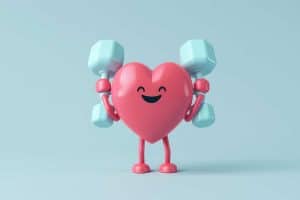
John’s Hopkins Medical says there are 4 types of exercise that improve heart health. They are Aerobic (Endurance), Strength, Flexiblity and Balance.
Makes sense to me.
Let’s Get Moving!
You Look Mahvelous!
You Look Mahvelous!

Let’s get down to basics. Are you more attractive when you are fit? Yes!
Research by Erik Postma found that top performers in the Tour de France were rated more attractive than bottom performers (1).
A study of women in 2024, concluded that “The analysis of the correlation between attractiveness and physical fitness indicates that in all the cases examined, those who performed better in the fitness tests not only feel but are also assessed as more attractive.” (2)
In a study published in Evolutionary Psychological Science, researchers found that college students who were “more frequent exercisers, independent of sex, had significantly higher self-perceived mate value than less frequent exercisers.” (3)
So, not only are they more attractive if they exercise, but they know it.
Let’s Get Moving!
1. Postma, E., (2014) A relationship between attractiveness and performance in professional cyclists. Royal Society, Biology Letters. 10: 20130966. http://dx.doi.org/10.1098/rsbl.2013.0966.
2. Lik, L. (2024). Physical fitness as a factor influencing the physical attractiveness of young women. Health Promotion & Physical Activity. 27, 2.
3. Dobersek, U. et al. (2021). Does Exercise Make Me More Attractive? Exploring the Relations Between Exercise and Mate Value. Evolutionary Psychological Science. 7, 124-133. https://doi.org/10.1007/s40806-020-00270-w
Let’s Get Happy
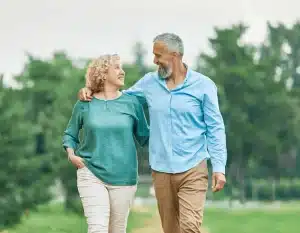 Let’s Get Happy
In a systematic review published in the Journal of Happiness Studies in 2019, researchers found a consistent link between exercise and happiness. They report that
“All the observational studies reported positive associations between physical activity and happiness. As little as 10-min physical activity per week or 1 day of doing exercise per week might result in increased levels of happiness.”
Take a walk with a friend and share your happiness.
Let’s Get Moving!
Zhang, Z., Chen, W. (2019) A Systematic Review of the Relationship Between Physical Activity and Happiness. J Happiness Stud 20, 1305–1322. https://doi.org/10.1007/s10902-018-9976-0
Have You Got a Minute?

Have You Got a Minute?
What is the basic unit of exercise that has value? Apparently, it is 1min. According to a study of 25,241 non-exercisers, published in Nature Medicine in 2022, every 1 min of moderate or vigorous activity or strength building activity has value. These researchers found that
“Compared with participants who engaged in no VILPA (vigorous intermittent lifestyle physical activity), participants who engaged in VILPA at the sample median VILPA frequency of 3 length-standardized bouts per day (lasting 1 or 2 min each) showed a 38%–40% reduction in all-cause and cancer mortality risk and a 48%–49% reduction in CVD (cardiovascular disease) mortality risk.”
Excuse me, I will be back in just a minute.
Let’s Get Moving!
Stanaktakis, E, et al. (2022) Association of wearable device-measured vigorous intermittent lifestyle physical activity with mortality. Nature Medicine, 28, 2521-2529
Alzheimer’s and Dementia Protection
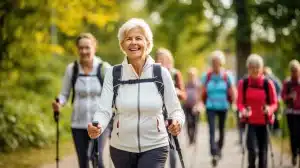 Alzheimer’s and Dementia Protection
According to the Alzheimer’s Society “Regular exercise can reduce the risk of developing dementia by about 28%. For Alzheimer’s disease specifically, the risk was reduced by 45%. These numbers come from an analysis that combined results of 16 studies into exercise and dementia.“ March, 2024
Let’s Get Moving!
Get a Grip

Get a Grip
There is overwhelming evidence that hand grip strength is related to many health outcomes such as bone density, fractures and falls, diabetes, sleep problems, cognitive impairment, depression among others. Grip strength may serve as an indicator for overall health. Researchers caution that good grip strength is an indicator, not a cause, of health benefits. They also encourage overall strength conditioning as a way to achieve many health benefits.
Bohannon, R. W. (2019), Grip strength: An indispensable biomarker for older adults. Clin. Interv Aging, 14, 1681-1691, National Library of Medicine
Let’s Get Moving!