

Movement as Medicine
I am amazed at how often what is old becomes new again.
There is a contemporary trend to treat movement as medicine. Several sources are promoting this message as a way to get more people to move into a healthier life.
The Federation of American Scientists says “It’s Time To Move Toward Movement as Mediciine.” They point to the huge body of research that shows that regular exercise has a powerful influence on prevention of, and recovery from, disease and age related conditions that limit activity and shorten life. They press for research in exercise to guide public policies to promote exercise.
“The need to translate research findings into policies that promote physical activity has never been higher, as the aging population in the U.S. and worldwide is expected to increase the prevalence of chronic medical conditions, many of which can be prevented or treated with physical activity.” (1)
The Hospital for Special Surgery advocates “Movement Is Medicine: Physical Activity and Exercise.” They make a distinction between daily physical activity and more structured exercise.
“Physical activity is any bodily movement that involves your muscles and expends energy. That includes simple movements such as climbing stairs, walking to work, raking leaves, strolling with your dog or playing with your kids. Exercise is physical activity that is planned, structured and repetitive. Examples include bicycling, swimming, using an elliptical trainer, brisk walking and running.” (2)
HHS recognizes that both forms of movement have health benefits.
 Boston University professor, Monica L. Wang, ScD, recommends that we can treat “Movement as Medicine: One Step At A Time” (3). Dr. Wang uses running as her “movement medicine” and emphasizes the added health benefits of doing exercise with other people. Running or walking groups have a long history of producing benefits for their members.
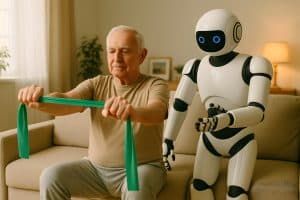 In a 2024 Forbes article Tyler Read, a certified personal trainer, explains how AI is reshaping the personal training industry. He notes that there are many startups in the AI fitness industry that are developing AI applications that have the potential to do three things for your fitness program: First, these AI apps will design a custom program of exercise according to your goals and capabilities. Second, they will take the data from your workouts and make realtime adjustments and recommendations to maximize your progress. Third, they will help you train to avoid injuries and, if you do injure yourself, help you recover quickly. (4)
The Health and Fitness Association, a non profit dedicated to the fitness industry, sees artificial intelligence (AI) as a force that will transform the member experience for fitness clubs and gyms. (5)
Today there is an abundance of easy to use personel fitness devices and apps such as the Apple watch, FitBit health coach, PUSH for strength building, Runna for race training, Hume for metabolic health, stress and recovery to name just a few.
It should not surprise us that these modern ideas actually have roots going back more than 2000 years. (6)
Susruta (600 BCE), of the Indus Valley, is the first known physician to prescribe physical exercise to treat obesity and diabetes. The benefits of resistance training have more recently emerged as a treatment for type 2 diabetes (7).
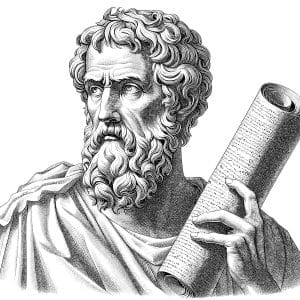
Hippocrates (460 BCE) is the first known physician to actually write a prescription for exercise for a patient with consumption. Exercise is still prescribed to treat consumption, now known as the infectious disease tuberculosis.
For more than 2600 years now, we humans have known, we should all get moving!
Are you ready for your doctor to prescribe squats?
 For a different take on Movement as Medicine, check out my article on “The Wonder Drug” here https://train4life.live/the-wonder-drug/
Let’s Get Moving!
- V. Dotson, (2023). https://fas.org/publication/movement-as-medicine/
- Hospital for Special Surgery. (2025). https://www.hss.edu/health-library/move-better/movement-is-medicine
- M. L. Wang. (2025). Movement as Medicine: One Step at a Time. PublicHealthPost.
- Tyler Read. (2024). The Future Of AI In Personal Training. The Future Of AI In Personal Training
- Health and Fitness Association. (2025). https://www.healthandfitness.org/improve-your-club/how-ai-is-transforming-fitness-apps/.
- C. M. Tipton, (2014). The history of “Exercise Is Medicine” in ancient civilizations. Adv Physiol Educ. 38(2):109–117.
- B. Strasser and D. Pesta. (2013). Resistance Training for Diabetes Prevention and Therapy: Experimental Findings and Molecular Mechanism, Biomed Res Int. 2013 Dec 22;2013