
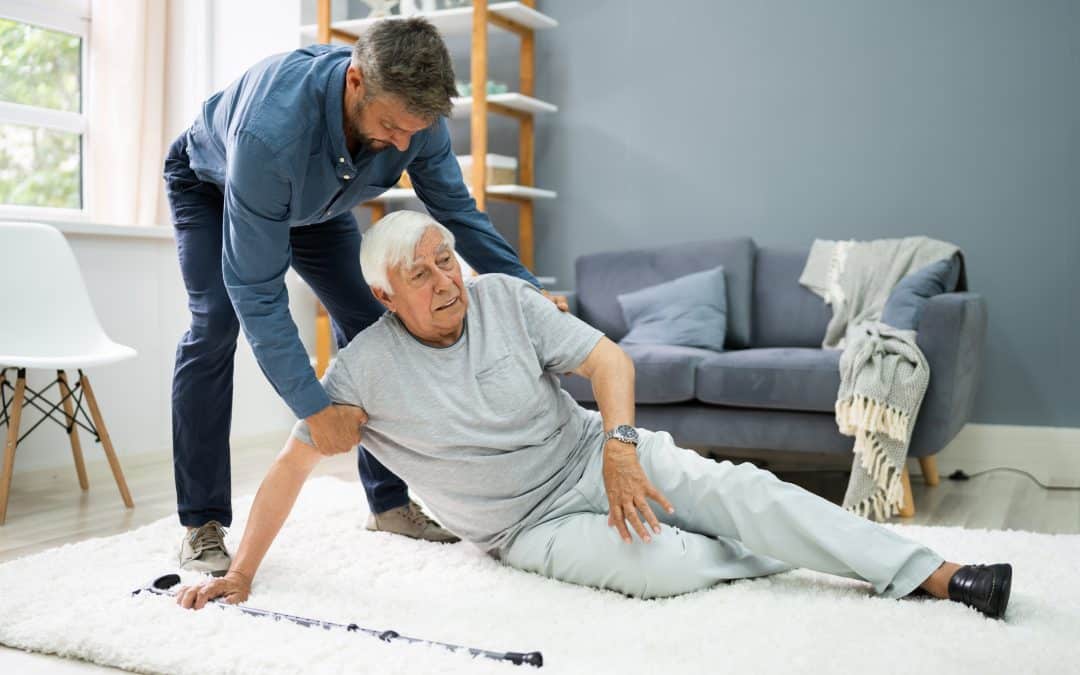
One day in 1998, when my father was mowing his lawn, he tripped, fell onto the sidewalk and broke his hip. He was taken to the hospital where he died. He was 82.
According to the Centers for Disease Control (1):
- Falls are the leading cause of injury-related death among adults ages 65 and older, and the death rate from falls is increasing.
- Falls are the leading cause of injury for adults ages 65 years and older.
- More than 1 in 4 older adults over 65 fall every year. Nearly 50% of those over 90 fall each year. Once you fall, your chance of falling again increases.
The National Institute on Aging has several tips for avoiding falls (2).
They include:
- Talk with your medical professional about medications that may affect your balance.
- Removing tripping hazards like loose rugs in your house.
- Provide adequate lighting including nightlights
- Add falls protection aides like grab bars in the bathroom.
- Get your vision and hearing checked regularly. Poor vision or hearing increase your chance of falling.
- Exercise regularly to improve your balance and strength.
I would like to expand on this last point. The consequences of falling are often more severe as you age. Without adequate exercise, older people develop weaker muscles and bones, are less flexible and have poor balance. All of these factors lead to frequent falls and more severe consequences when you fall.
There is good news! By doing the right exercises you will reduce your chances of having a fall that results in an injury.
Please note, before you start a new program of exercise it is wise to check with your doctor.
According to the Department of Health and Human Services (HHS) there are 3 types exercises you should do to reduce your chances of a fall and the consequences if you do fall. They are:
 Balance exercises can help prevent falls. Learn more about Balance exercises here (insert link).


- Resistance exercises help build muscle and bone strength and can reduce the severity of a fall when it happens. Learn more about Strength building exercises here (insert link).
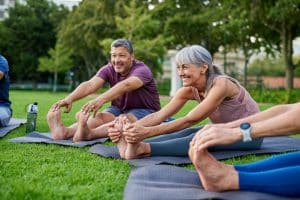
- Flexibility exercises can help avoid falls and reduce injury when they do happen. Learn more about Flexibility exercises here (insert link).
Explore Train4Life.live to learn more about exercises you can do to prevent falls and have a more active and healthy life.
- The Centers for Disease Control and the National Institutes of Health are part of the Health and Human Services Department. All of the information provided in this article can be verified at their respective websites.
National Institutes of Health/National Institute on Aging (https://www.nia.nih.gov/health/falls-and-falls-prevention/falls-and-fractures-older-adults-causes-and-prevention )
Poor balance is associated with increased falls in older adults (2). According to the National Council on Safety “the second leading cause of unintentional injury-related death is falls. In 2022, 46,653 people died in falls at home and at work, according to Injury Facts®.”
According to the Centers for Disease Control “Falls are the leading cause of fatal and nonfatal injuries among older adults.” And, the Academy of Neurologic Physical Therapy has established a special interest working group dedicated to helping people develop their balance and prevent falls (https://www.neuropt.org/special-interest-groups/balance-falls ).
Given all this evidence that balance is critical for fall avoidance, don’t be surprised if, the next time you have an annual physical exam, your doctor gives you a balance test.
Let’s get ready for the test. Balance exercises are easy and can be done almost anywhere. Start by finding a place where you can reach out to touch something to stabilize yourself if you need to.
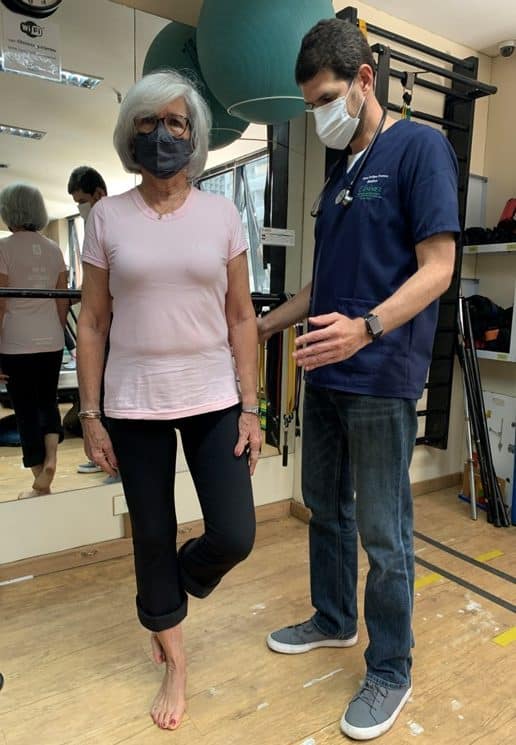
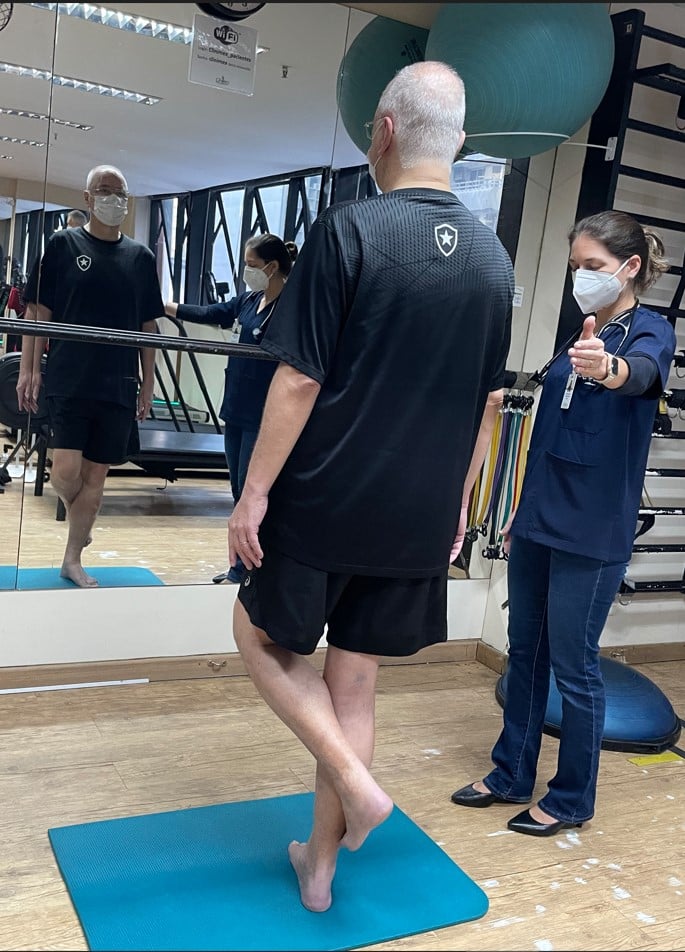
The folks in the photo below are in a dance studio doing a balance exercise while holding on to a bar. But you don’t need a studio. You can do this almost anywhere. Just hold the balance position for 10 seconds or more and then repeat on the other foot. Get in the habit of doing this 2 or 3 times a day and you will be on your way to good balance.

Another exercise you can do is simply walk but take each step slowly so that you incorporate a moment of balance in each step as you are performing a natural activity – walking. A variation of this is to take a step sideways with your right foot and balance momentarily on that foot. Then step back and balance on the left foot for a few seconds. As you get more skilled at this movement you can stand on each foot for a longer period. When you do this, do you notice that your balance is better on one foot than the other?
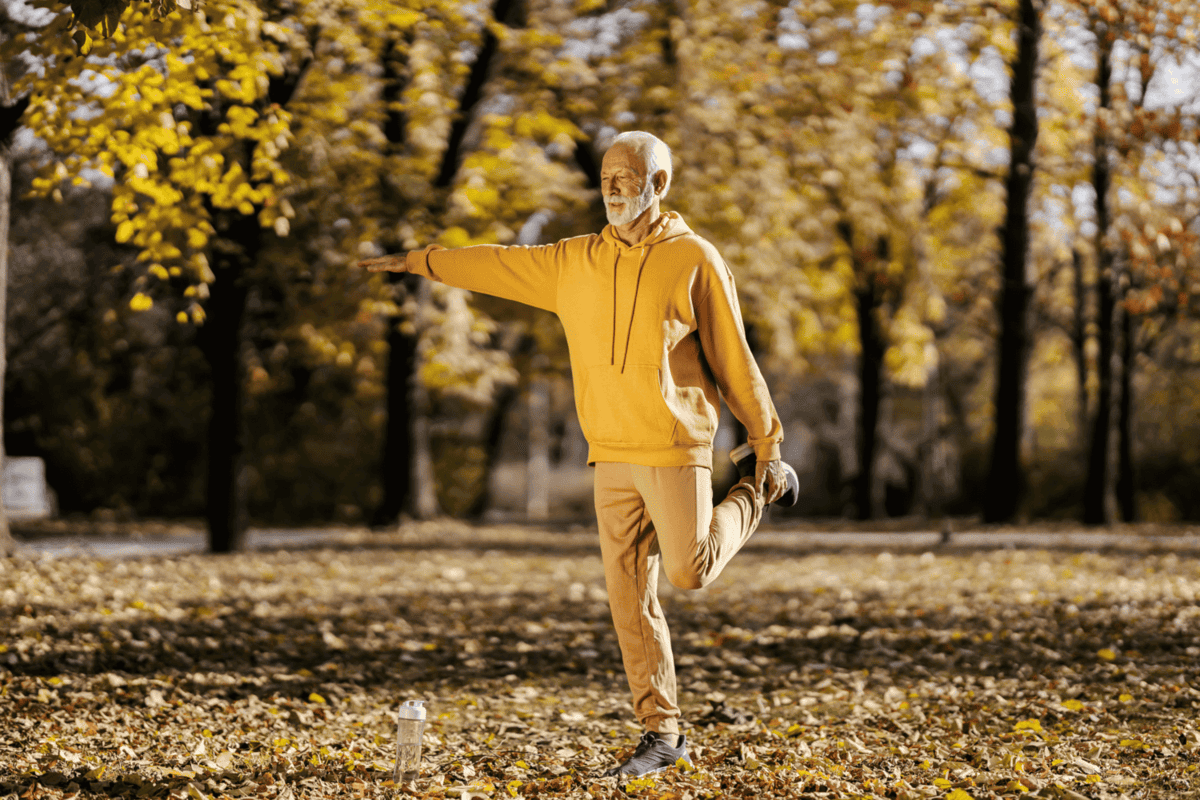
Among all the exercise categories we are encouraged to practice, balance is the easiest to do.
Let’s Get Moving!
- Araujo CG, de Souza e Silva CG, et al. (2022). Successful 10-second one-legged stance performance predicts survival in middle-aged and older individuals. British Journal of Sports Medicine. 56:975-980. This research was performed at the CLINIMEXC – Exercise Medicine Clinic in Rio de Janeiro, Brazil.
- Xing, L., et al. (2023). Falls caused by balance disorders in the elderly with multiple systems involved: Pathogenic mechanisms and treatment strategies. Front Neurol. Vol 23;14:1128092. doi: 10.3389/fneur.2023.1128092