
There is a bit of confusion on the internet about the words “stamina” and “endurance.” Some bloggers use them interchangeably. They shouldn’t.
Stamina is the ability to perform an activity at high intensity for a “long” time. The longer you can do it, the more stamina you have. The 440 yard race is a good example. When I ran the 440 in high school I was totally spent at the finish line. I gave everything I had in a little over 1 minute. The current record is 44.5 seconds set by John Smith in 1971.
Endurance, on the other hand, is about doing an activity at less than maximum effort for a “long” time. This includes long walks, hikes, golfing, cycling, gardening, swimming and, of course, dancing. If you have grandchildren, you already know what endurance is. One way to judge if you are doing an endurance exercise is if your breathing is affected. If you can talk, but not sing, because you are breathing faster, then you are in an endurance mode. The longer you can keep it up, the more endurance you have.

Endurance is one of the 4 fitness capabilities we focus on because it helps you do more fun activities in your life and it is great for enhancing heart and lung function among other benefits. As we get older, endurance is more of a concern than stamina. We want to be able to do the things we have always done, but without getting tired. As we get older, we seem to get tired sooner than we did before. It doesn’t have to be that way.
Much of the attention on the health benefits of endurance training focuses on the heart, lungs and circulatory system. According to the Cleveland Clinic “Cardiovascular endurance is a way to estimate a person’s physical fitness. People of all ages can improve their cardiovascular endurance by adding aerobic activity to their days and increasing the amount and difficulty of the exercise.” They conclude with “No matter what age you are, you can improve your cardiovascular endurance.”
You don’t have to run miles and miles to achieve endurance. The results of the largest study of its kind, published in the European Journal of Preventive Cardiology in 2023, found that “walking at least 3867 steps a day started to reduce the risk of dying from any cause, and 2337 steps a day reduced the risk of dying from diseases of the heart and blood vessels (cardiovascular disease).” They concluded that the more you walk the more benefits you receive.
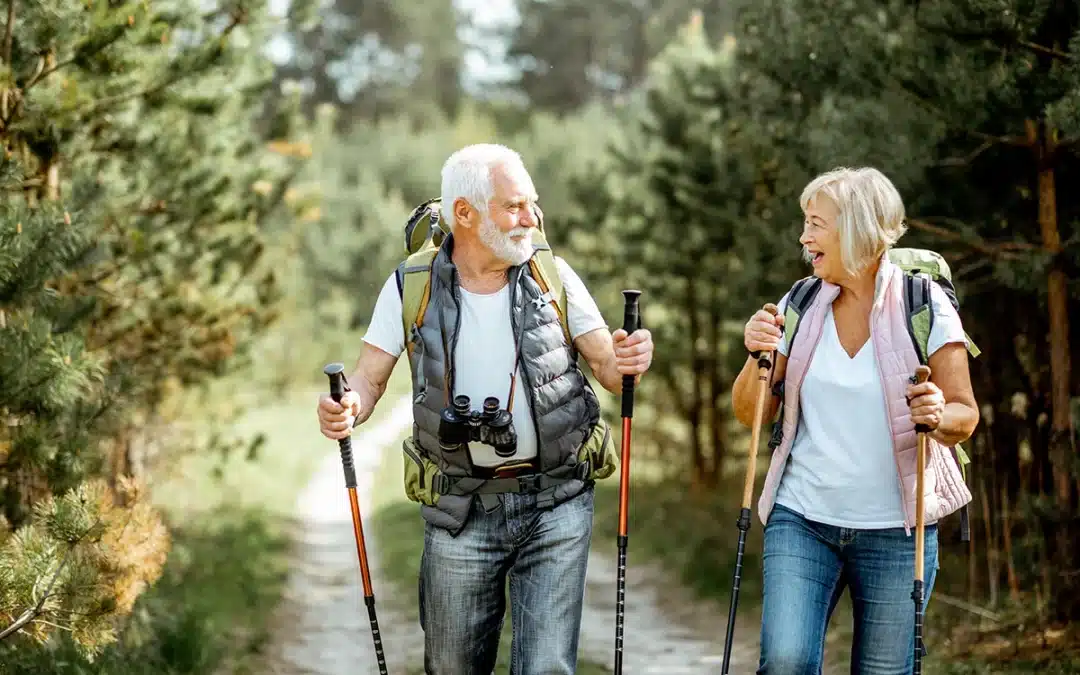
There are lots of exercises you can do that develop your endurance regardless of current level of fitness. The simplest is walking. If you can walk, take a walk. Begin by walking at a speed that you can handle for an extended period, for example 20 min. Bringing a friend along enhances the experience because you can talk while you are walking. As you get accustomed to walking, pick up the pace a bit. Insert an occasional burst of fast walking if you can. If you find yourself breathing a bit harder, that’s good. If it gets too hard, slow down to a comfortable walking pace. Those intervals of pushing yourself will reap health and fitness benefits over time. This is an activity you can do every day. It’s even better if you have a companion.
Over time you should be able to lengthen your walking route or walk a little faster. If you are really ambitious, you can time yourself. You and your walking companion can encourage each other to push yourselves. There are so many natural activities that improve endurance it is not necessary to invent a new endurance exercise. Just start walking.
There are many benefits to improving your endurance. Perhaps the best benefit is that you can do more fun things longer. To learn more about endurance and walking click HIIT Walking
Let’s Get Moving!