

Strength is one of the 4 fitness capabilities (endurance, strength, flexibility and balance) we need to maintain as we get older in order to enjoy life to the fullest.
A dear friend of mine recently celebrated his 80th birthday. After the guests had left, he confided in me that his muscles were getting smaller and weaker. He said that he was having difficulty getting out of his favorite chair. After we joked about aging not being for the faint of heart, we talked about sarcopenia.
Sarcopenia is a condition in which there is a loss of muscle size and strength associated with aging. According to Harvard Health, “After age 30, you begin to lose as much as 3% to 5% (of muscle) per decade. Most men will lose about 30% of their muscle mass during their lifetimes.” (1) In more extreme cases muscle losses result in the condition of sacropenia. It is estimated that 5–13% of elderly people aged 60–70 years are affected by sarcopenia. The numbers increase to 11–50% for those aged 80 or above (2).
There are multiple factors that lead to muscle loss and sarcopenia including poor diet and lack of exercise. Even if you have a good diet but don’t exercise, you are headed for trouble. Muscle and strength loss makes it more difficult to perform daily tasks that used to be easy. Grocery shopping, gardening, climbing stairs, getting into and out of a car or a bus or a train are all impacted by muscle loss. And, as we “adjust” to our limited mobility, we lose even more mobility. It’s a slippery slope but there is good news.
The good news is that we can slow the progression of muscle loss and, in many cases, reverse it. That is, we can take action to increase our strength and get back to doing many of the activities that seem to have slipped away. The key is exercise. Here are three exercises you can do to get on the path. None require special equipment or a trip to the gym.
- Walking: This is a perfect case of use it or lose it. This is also a great activity to do with a friend. It is easy to measure progress and reward yourself when you have a good walk. The more walking you do the more you develop your endurance, another of the 4 key capabilities we need to maintain.

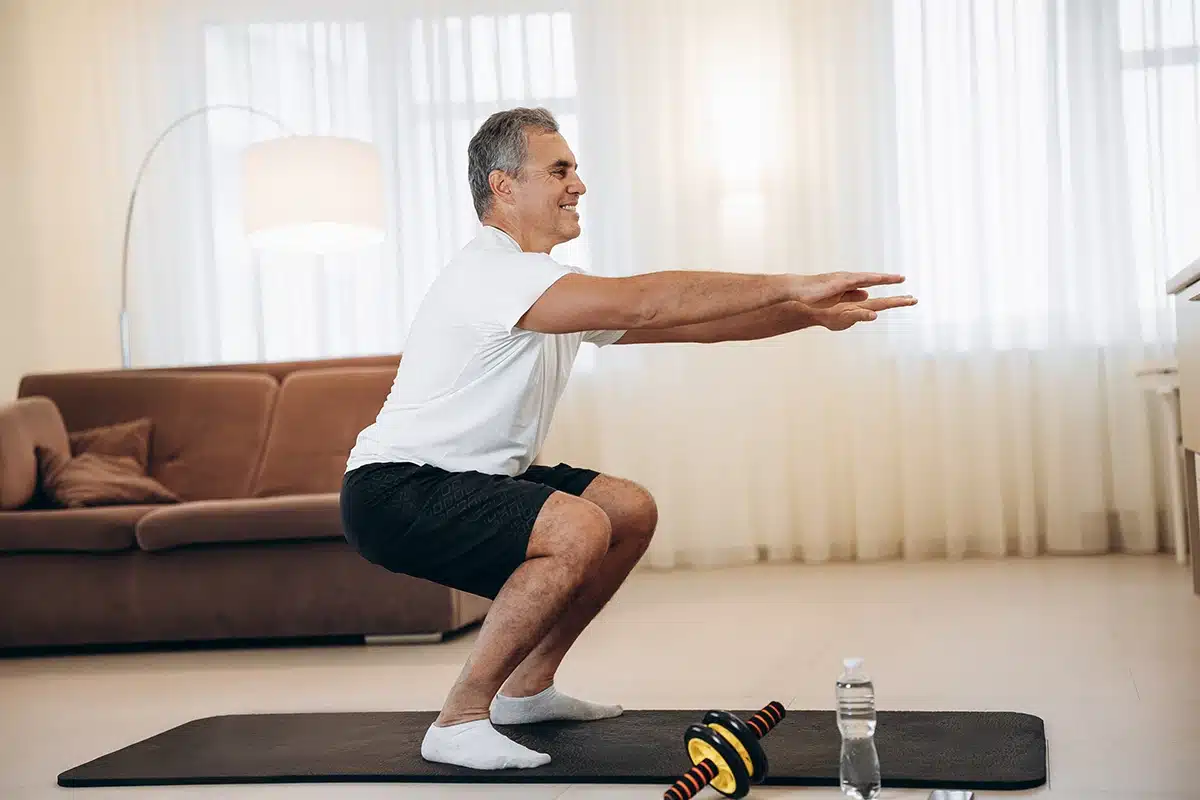
2. Squats: Squats have become a go-to exercise for building lower body strength. Walking is great for, well, walking. But squats are great for building the strength you need for getting in and out of chairs and cars and for bending down to pick something off the floor. A good way to start is by sitting in a chair and then standing up. Start by doing as many as you can comfortably. Repeat this on a daily basis and increase the number of seat squats you can do until you get to 12. After some time, this exercise should become much easier and you should be able to do two sets of 10 repetitions every day. That should take less than 2 minutes. The lunge is another popular exercise for lower body strength building. The lunge has the advantage of bringing in a bit of balance into the movement.
3. Farmers Walk: This exercise is simply walking while carrying weights (e.g. dumbbells). This exercise will prepare you for carrying things like grocery bags or suitcases. Think of a farmer using a loaded wheelbarrel or carrying a bucket of feed in each hand. My first job was on the Pierce dairy farm in 1961. Farming is hard work. But if you don’t have buckets of feed lying around, or dumbbells, you can use half gallon bottles of water or other weight, one in each hand. Use anything that adds a bit of extra weight to the task. Once you have a weight in each hand, pick a walking route around inside or outside of the house. Try it once. You can add to the challenge by adding distance, weight or, if you are ambitious, you can walk up stairs. A variation of the farmer’s walk is to go for a walk wearing a weight belt or a backpack with a weight (some books) in it. You can be very creative with this.

There are many other exercises that will make you stronger. I will cover those in future articles. For now, get started on these exercises and you will be amazed at the progress you make.
Let’s Get Moving!
- Harvard Health: https://www.health.harvard.edu/staying-healthy/preserve-your-muscle-mass
- Von Haehling, S., Morley, J. E. (2010). An overview of sarcopenia: facts and numbers on prevalence and clinical impact. J Cachexia Sarcopenia Muscle. 2010 Dec 17;1(2):129–133. doi: 10.1007/s13539-010-0014-2
- AARP says the most important exercise for older people is the squat (https://www.aarp.org/health/healthy-living/info-2022/squats-best-exercise-for-strength.html)